

Travertine is one of the most popular natural stone choices in Tampa Bay. From pool decks in South Tampa to kitchen floors in Clearwater, this stone shows up in thousands of homes across the region. It looks stunning when it’s well maintained. It also deteriorates fast when it’s neglected, especially in Florida’s heat and humidity.
This guide covers everything Tampa Bay homeowners need to know about keeping travertine in top condition. Marble Mechanics has been restoring and maintaining travertine across Hillsborough, Pinellas, Manatee, Sarasota, and Pasco counties for over 27 years. The advice here comes directly from what we see in homes every week, not from generic articles written for a national audience.
Whether your travertine is indoors, around a pool, or on a patio, this travertine maintenance guide will help you understand what it needs, what damages it, and when it’s time to bring in a professional.
What Makes Travertine Different from Other Natural Stone
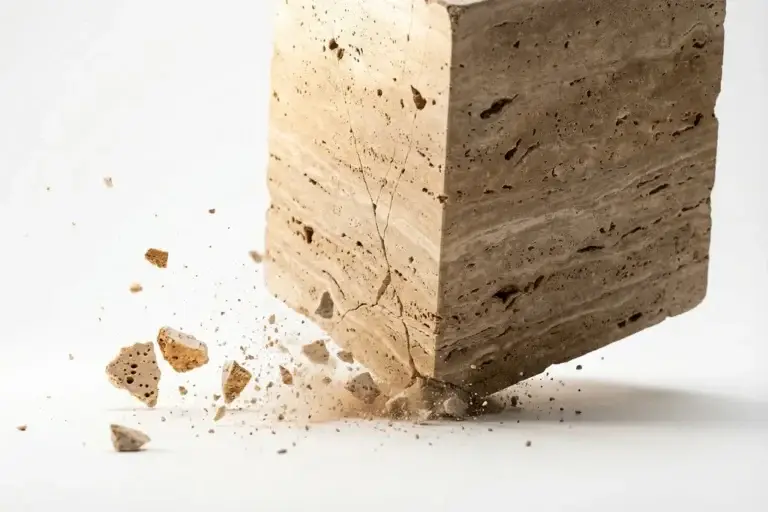
Travertine is a form of limestone deposited by mineral springs. It forms with natural holes, pits, and channels that give it a textured, organic look. Those same characteristics also make it more porous than marble or granite, which means it absorbs liquids faster and reacts more to acidic substances.
Tampa Bay homeowners typically encounter three travertine finishes:
- Polished has a glossy, reflective surface. Common on indoor floors and countertops. It shows scratches and etching more easily.
- Honed has a smooth, matte finish. Popular in living areas and bathrooms. More forgiving with everyday wear.
- Tumbled has a rustic, textured surface with rounded edges. The most common finish on outdoor pool decks and patios across Tampa Bay.
Most travertine sold in Florida is “filled,” meaning the natural holes have been filled with resin or cement during manufacturing. Over time, especially outdoors, that fill material can crack, shrink, or wash out. When that happens, the holes reopen and collect dirt, water, and organic growth. This is one of the most common problems Marble Mechanics sees in Tampa Bay homes, particularly on outdoor travertine surfaces that need restoration.
The Natural Stone Institute classifies travertine as a calcareous stone, meaning it contains calcium carbonate and reacts to acids. Vinegar, citrus juice, wine, and many household cleaners will etch the surface on contact. Understanding this single fact will prevent most of the damage homeowners accidentally cause.
Daily and Weekly Travertine Care
The good news is that regular travertine maintenance doesn’t require expensive products or complicated routines. Consistency matters more than intensity.
Daily Routine
Dust and sand are the biggest daily threats. In Tampa Bay, where windows stay open and sand tracks in from pools and beaches, fine grit acts like sandpaper under foot traffic. A quick sweep with a soft bristle broom or a dry microfiber mop picks up debris before it scratches the surface. Do this daily in high traffic areas like entryways, kitchens, and pool lanais.
Weekly Cleaning
Once a week, mop with warm water and a pH-neutral stone cleaner. Products specifically labeled for natural stone work best. Avoid anything containing vinegar, lemon, ammonia, or bleach. These damage the stone’s surface over time, even if you don’t see immediate results.
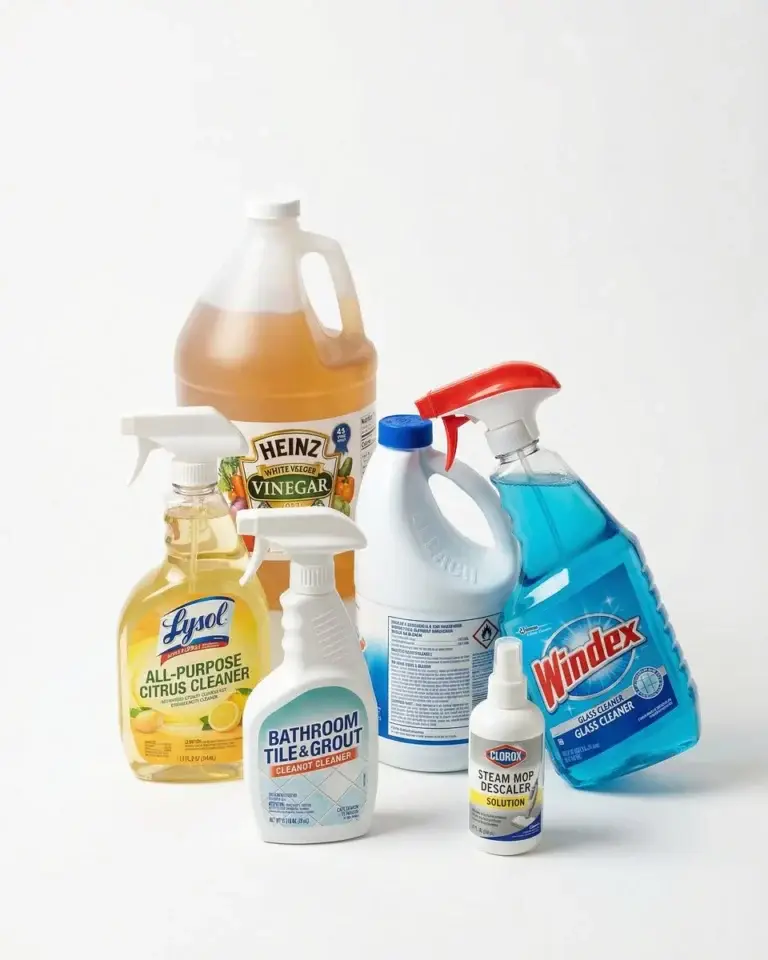
Here’s what to use and what to avoid:
Safe to Use
- pH-neutral stone cleaners
- Plain warm water
- Mild dish soap (sparingly)
- Soft microfiber mop or cloth
Never Use
- Vinegar or lemon juice
- Windex or ammonia-based cleaners
- Bleach
- Bathroom tile cleaners
- Steam mops on unsealed travertine
For spills, act immediately. Blot with a clean cloth rather than wiping. Wiping spreads the liquid across a larger area of porous stone. Coffee, red wine, and tomato-based sauces are the most common staining culprits Marble Mechanics encounters in Tampa Bay kitchens.
Sealing Travertine in Florida’s Climate
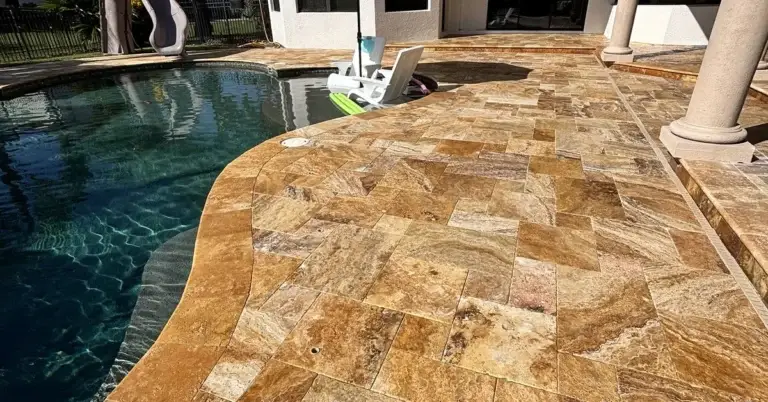
No travertine maintenance guide would be complete without a deep look at sealing. It’s the single most important maintenance step for travertine, and Florida’s climate makes it even more critical. High humidity, heavy summer rain, and intense UV exposure all accelerate sealer breakdown compared to drier climates.
Why Sealing Matters More in Florida
Tampa Bay averages over 50 inches of rain per year, most of it falling between June and September. Outdoor travertine takes a beating during this period. Without proper sealing, rainwater penetrates the stone, carrying dirt and organic material into the pores. As moisture cycles between wet and dry, mineral deposits form and the stone starts to look cloudy or discolored.
Indoor travertine faces a different challenge. Florida homes run air conditioning for eight months or more, creating constant temperature differentials between the cool interior and the warm, humid air outside. This causes micro-condensation on stone surfaces, which slowly degrades unsealed travertine.
Sealing Frequency
For indoor travertine floors in Tampa Bay homes, resealing every 2 to 3 years is a solid baseline. High traffic areas like kitchens and entryways may need attention sooner.
Outdoor travertine, including pool decks and patios, needs resealing every 1 to 2 years. The combination of rain, chlorine splash, UV exposure, and foot traffic breaks down sealers faster than any indoor environment.
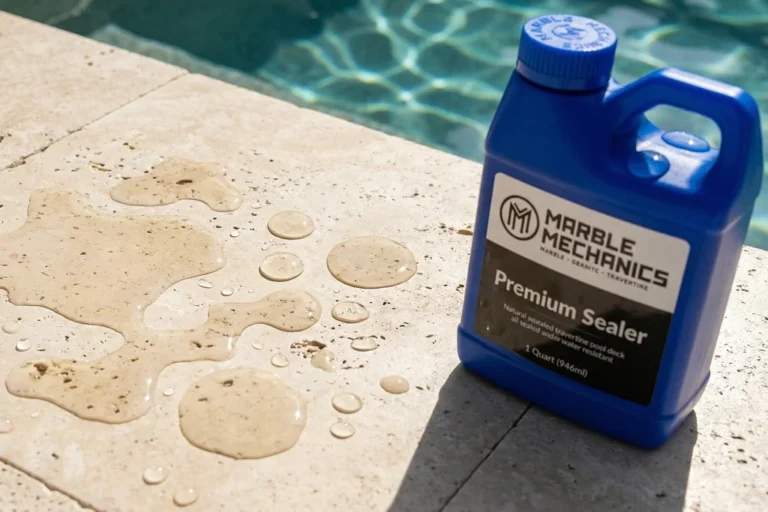
Quick Test: Does Your Sealer Still Work?
Place a few drops of water on the travertine surface. If the water beads up, your sealer is intact. If the water absorbs into the stone and darkens the area within a few minutes, it’s time to reseal.
Types of Sealers
There are two main categories:
- Penetrating (impregnating) sealers absorb into the stone and protect from within. These are the preferred choice for most travertine in Florida because they allow the stone to breathe while blocking moisture from below. They don’t change the stone’s appearance.
- Topical sealers sit on the surface and create a physical barrier. These can add a slight sheen and provide stronger stain protection, but they trap moisture in humid climates and can peel or cloud over time.
Marble Mechanics uses penetrating sealers for the majority of travertine work across Tampa Bay. In a climate this humid, letting the stone breathe is essential. Topical sealers tend to cause more problems than they solve on outdoor surfaces. Professional stone sealing ensures the right product is matched to your specific travertine and its location.
Travertine Pool Deck Maintenance in Tampa Bay
Pool decks are where travertine takes the most abuse in Florida homes. Between chlorine exposure, sunscreen residue, standing water, and bare foot traffic, pool deck travertine faces conditions that no indoor floor ever will.
Chlorine and Salt Water Impact
Traditional chlorine pools splash acidic water onto surrounding travertine every time someone enters or exits. Over months and years, this slowly etches the stone’s surface, leaving white marks and rough patches near the pool edge. Salt water pools are gentler but still deposit salt crystals that work into the pores as they dry.
Pro Tip
After pool use, hose down the deck with fresh water to dilute chemical residue before it sits on the stone. This simple 5-minute habit can extend the life of your sealer significantly.
Joint and Fill Maintenance
The gaps between travertine pavers on pool decks are filled with sand or polymeric sand. Florida’s heavy summer rain gradually washes this material out, leaving gaps where water collects, weeds grow, and pavers shift. Check joints at least twice a year and refill as needed, ideally before the rainy season starts in June and again after it ends in October.
When original resin fills in the stone’s surface holes begin to crack or pop out, you’ll notice small pits that collect dirt and turn dark. This is common on Tampa Bay pool decks over 5 years old. Professional refilling restores the smooth surface and prevents further deterioration.
Preventing Slips and Organic Growth
Tumbled travertine provides natural slip resistance when dry, but algae and mildew growth in Florida’s humidity can make any surface slippery. Shaded areas of pool decks near screen enclosures are the worst spots. A light cleaning with a stone-safe algae remover every few weeks during summer keeps the surface safe. Pressure washing works but must be done carefully. Too much pressure damages the stone and blasts out joint material. Low pressure with a wide fan tip is the right approach.
Common Travertine Problems in Tampa Bay Homes
After 27 years of restoring travertine across the Tampa Bay area, Oscar Tineo and the Marble Mechanics team have seen the same problems repeat across neighborhoods from Davis Islands to Dunedin, from Sarasota to New Tampa. Here are the most common issues and what causes them.
Yellowing and Discoloration
Travertine that gradually turns yellow is almost always a moisture problem. Water trapped beneath the stone wicks upward, carrying iron deposits that oxidize and stain the surface. This is particularly common in Florida homes with slab foundations where ground moisture migrates through the concrete. Poor drainage around outdoor travertine patios causes the same problem from the surface down.
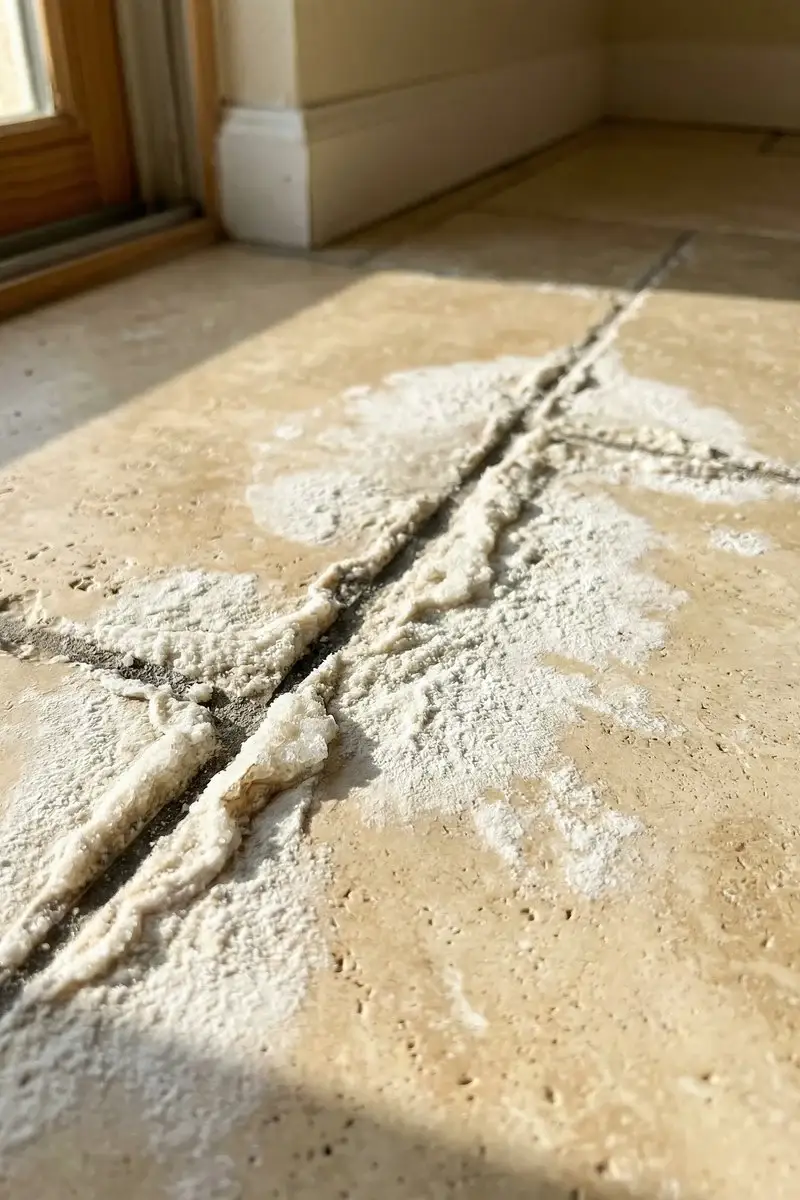
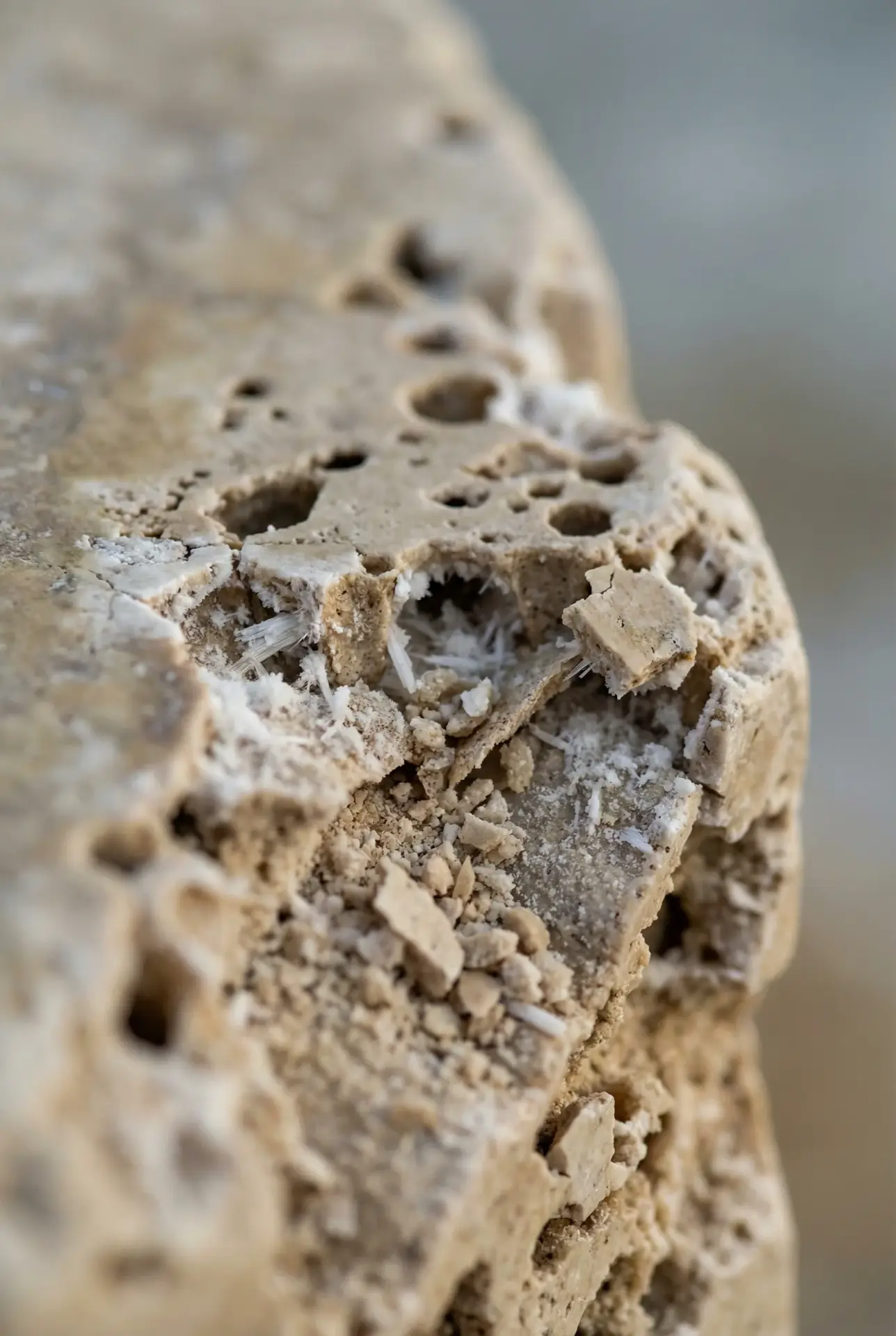
White Haze or Efflorescence
A white, powdery residue on travertine surfaces is efflorescence, caused by mineral salts migrating through the stone as moisture evaporates. Tampa Bay’s humidity slows evaporation, which can make efflorescence persistent. It’s common on newly installed travertine and on outdoor surfaces after heavy rain. Light cleaning removes it temporarily, but solving the underlying moisture issue is the permanent fix.
Etching and Dull Spots
Every call Marble Mechanics gets about “stained” travertine is actually etching about half the time. Etching happens when acidic liquids dissolve the calcium in the stone’s surface, leaving a dull, lighter mark. It’s not a stain sitting on top of the stone; it’s actual surface damage. Cleaning products containing vinegar or citric acid are the most common cause. In Bayshore Beautiful and Harbour Island homes where homeowners entertain frequently, wine and cocktail etching on travertine bar tops and kitchen counters is something we restore regularly.
Cracking and Lippage
Travertine tiles that crack or develop uneven edges (called lippage) are usually the result of installation problems or foundation movement. Florida’s sandy soil shifts more than homeowners realize, especially after heavy rain events or extended dry periods. If multiple tiles are cracking in the same area, it may indicate a foundation issue rather than a stone issue.
Mildew in Grout Lines and Holes
Florida’s humidity creates ideal conditions for mildew, especially in bathrooms and outdoor spaces. When travertine’s fill material deteriorates and exposes the original holes, mildew takes root in those pockets and becomes difficult to remove with surface cleaning alone. Professional travertine restoration includes deep cleaning these pockets and refilling them to prevent recurring growth.
Seasonal Travertine Maintenance Calendar for Florida
One thing that separates a useful travertine maintenance guide from a generic one is a schedule built for your actual climate. Tampa Bay’s weather doesn’t follow the traditional four-season pattern, so your maintenance rhythm should reflect what Florida actually does to the stone.
Spring (Mar – May)
Best time for annual professional inspection and sealing. Moderate humidity means sealers cure properly. Check all outdoor joints and fills after the dry season. Clean pollen buildup from textured surfaces.
Summer (Jun – Sep)
Rainy season. Focus on drainage and regular cleaning. Mildew growth accelerates on shaded surfaces. Hose pool decks after heavy rain. Do not seal during this period; sealers won’t cure properly with daily rain.
Fall (Oct – Nov)
Second sealing window if spring was missed. Inspect outdoor travertine for summer damage. Refill joints washed out during rainy months. Clean organic stains from fallen leaves before they set.
Winter (Dec – Feb)
Driest, coolest months. Light maintenance only. Ideal time for indoor travertine projects like honing, polishing, or deep cleaning since humidity is lowest and work areas dry faster.
When Your Travertine Needs Professional Restoration
Regular maintenance extends the life of travertine significantly, but every travertine surface eventually needs professional attention. Here are the signs that it’s time to call Marble Mechanics:
Widespread dullness that cleaning doesn’t improve. The stone has lost its finish and needs honing or polishing.
Deep scratches or traffic patterns visible across the floor. Surface-level scratches can be honed out; deep ones may need diamond grinding.
Persistent stains that don’t respond to poultice treatment. Some stains penetrate deep enough to require professional extraction.
Fill material falling out across multiple tiles. Spot repairs work for one or two holes, but widespread fill loss needs professional refilling.
Efflorescence that keeps returning after cleaning. The moisture source needs to be identified and addressed.
Uneven tiles or lippage creating trip hazards. Grinding and leveling require professional equipment.
Sealer failure across large areas. Stripping old sealer and reapplying properly is not a DIY job on large surfaces.
The difference between maintenance and restoration is important. Maintenance is what you do to prevent problems. Restoration is what a professional does to fix problems that maintenance can’t solve. Marble Mechanics provides both across Tampa Bay, and a stone surface assessment can determine exactly what your travertine needs.
Client Story: Westchase, Tampa
A homeowner contacted Marble Mechanics about travertine pool deck pavers that had turned dark and felt rough underfoot after years without professional maintenance. Heavy algae buildup and deteriorated sealer had left the stone looking nothing like it did when installed. The restoration process included deep cleaning, fill repair, honing, and fresh sealer application. The deck went from looking like it needed replacement to looking like new installation. Proper annual maintenance going forward will keep it that way for years.
Travertine Maintenance Costs: What to Expect
Homeowners often ask whether travertine is “worth the maintenance.” The honest answer is that well-maintained travertine adds real value to a home and lasts for decades. Neglected travertine becomes an expensive problem.
The Natural Stone Institute notes that natural stone flooring, including travertine, remains one of the most sought-after features in residential real estate, particularly in warm-climate markets like Florida.
Here’s a realistic breakdown of maintenance costs for Tampa Bay homeowners:
| Service | Cost | Frequency |
|---|---|---|
| pH-neutral stone cleaner | $15 to $25 per bottle | Every 2 to 3 months |
| Professional sealing (indoor) | $1.50 to $3.00 / sq ft | Every 2 to 3 years |
| Professional sealing (outdoor / pool deck) | $2.00 to $4.00 / sq ft | Every 1 to 2 years |
| Professional restoration (honing + sealing) | $3.00 to $6.00 / sq ft | As needed |
| Joint and fill repair | $200 to $500 typical | As needed |
| Full travertine replacement | $15 to $30 / sq ft installed | Avoidable with maintenance |
Consistent maintenance costs a fraction of replacement and keeps the stone performing for 50 years or more.
Travertine Maintenance Guide FAQ
What is the best cleaner for travertine floors?
A pH-neutral stone cleaner is the safest option for regular travertine cleaning. Look for products specifically formulated for natural stone. Plain warm water works for daily mopping. Avoid anything acidic (vinegar, lemon, citrus-based cleaners), ammonia-based products, and standard bathroom or kitchen tile cleaners. These damage the calcium in travertine and cause etching over time.
How often should travertine be sealed in Florida?
Indoor travertine in Tampa Bay homes should be resealed every 2 to 3 years. Outdoor travertine, especially pool decks and patios, needs resealing every 1 to 2 years due to rain, UV exposure, and chemical contact. Florida’s humidity breaks down sealers faster than drier climates. The water drop test (a few drops on the surface; if they absorb instead of beading, it’s time to reseal) is the easiest way to check.
Can you use vinegar on travertine?
No. Vinegar is acidic and reacts with the calcium carbonate in travertine, causing etching (permanent dull marks on the surface). This is one of the most common mistakes Marble Mechanics sees in Tampa Bay homes. Many general cleaning guides recommend vinegar for floors, but it should never be used on travertine, marble, limestone, or any calcareous stone.
How do you prevent mildew on travertine in humid climates?
In Tampa Bay’s humidity, mildew prevention comes down to three things: good sealing, adequate ventilation, and regular cleaning. Sealed travertine resists mildew growth because moisture can’t penetrate the surface. In bathrooms, run exhaust fans during and after showers. On outdoor surfaces, keep shaded areas clean and free of standing water. A stone-safe mildew remover applied every few weeks during summer stops growth before it becomes visible.
Is travertine high maintenance compared to porcelain tile?
Travertine requires more attention than porcelain, yes. Porcelain is non-porous and doesn’t need sealing, while travertine is porous, reactive to acids, and needs periodic sealing. That said, travertine offers a natural warmth and character that manufactured tile can’t replicate. The maintenance difference is manageable with a simple routine: sweep daily, mop weekly, seal every 1 to 3 years depending on location.
What causes travertine to turn yellow?
Yellowing in travertine is typically caused by iron oxidation. Moisture migrating through or beneath the stone carries dissolved iron, which oxidizes when it reaches the surface and turns yellow or rust-colored. In Florida, this is common with slab-on-grade foundations where ground moisture wicks upward. Improper sealer application that traps moisture can also cause yellowing. Professional assessment is needed to determine the source and correct it.
Should outdoor travertine be maintained differently than indoor?
Absolutely. Outdoor travertine in Tampa Bay faces rain, UV light, pool chemicals, organic debris, and temperature swings that indoor floors never experience. Outdoor surfaces need more frequent sealing (every 1 to 2 years vs. 2 to 3 years indoor), regular joint inspection, and proactive mildew prevention. Penetrating sealers are essential outdoors to allow moisture to escape. Indoor travertine maintenance is lighter but still requires pH-neutral cleaning and periodic sealing.
How long does travertine last with proper maintenance?
Travertine is one of the most durable natural stones available. With proper maintenance, travertine floors and surfaces can last 50 to 100 years or more. Many travertine structures around the world are thousands of years old. The key variable isn’t the stone itself but how it’s maintained. Regular sealing, proper cleaning, and timely professional restoration when needed keep travertine performing across generations of homeowners.
Tampa Bay Service Areas
Marble Mechanics provides travertine maintenance, restoration, and sealing services across the greater Tampa Bay area, including Tampa, South Tampa, Hyde Park, Davis Islands, Palma Ceia, Bayshore Beautiful, Westchase, Carrollwood, New Tampa, Brandon, Riverview, Valrico, Wesley Chapel, Lutz, Temple Terrace, St. Petersburg, Clearwater, Largo, Palm Harbor, Dunedin, Tarpon Springs, Safety Harbor, Seminole, Treasure Island, St. Pete Beach, Bradenton, Sarasota, Lakewood Ranch, Siesta Key, Longboat Key, Osprey, Venice, Nokomis, Palmetto, Ellenton, Parrish, Land O’ Lakes, Odessa, Trinity, and surrounding communities across Hillsborough, Pinellas, Pasco, Manatee, and Sarasota counties.
Not Sure If Your Travertine Needs Maintenance or Restoration?
Marble Mechanics offers free assessments throughout Tampa Bay.
Written by Oscar Tineo, Founder of Marble Mechanics, with 27+ years of stone restoration experience in Tampa Bay. Have a travertine question this guide didn’t cover? Call 813-625-3377 or visit marblemechanics.com.
Related reading: Saltillo Tile Restoration Tampa Bay: A Neighborhood Guide